Agentic decision workflow
Product demonstrator · Representative data · Officer approval · 14 registered analysis nodes
Designing an AI credit workflow that keeps people in authority
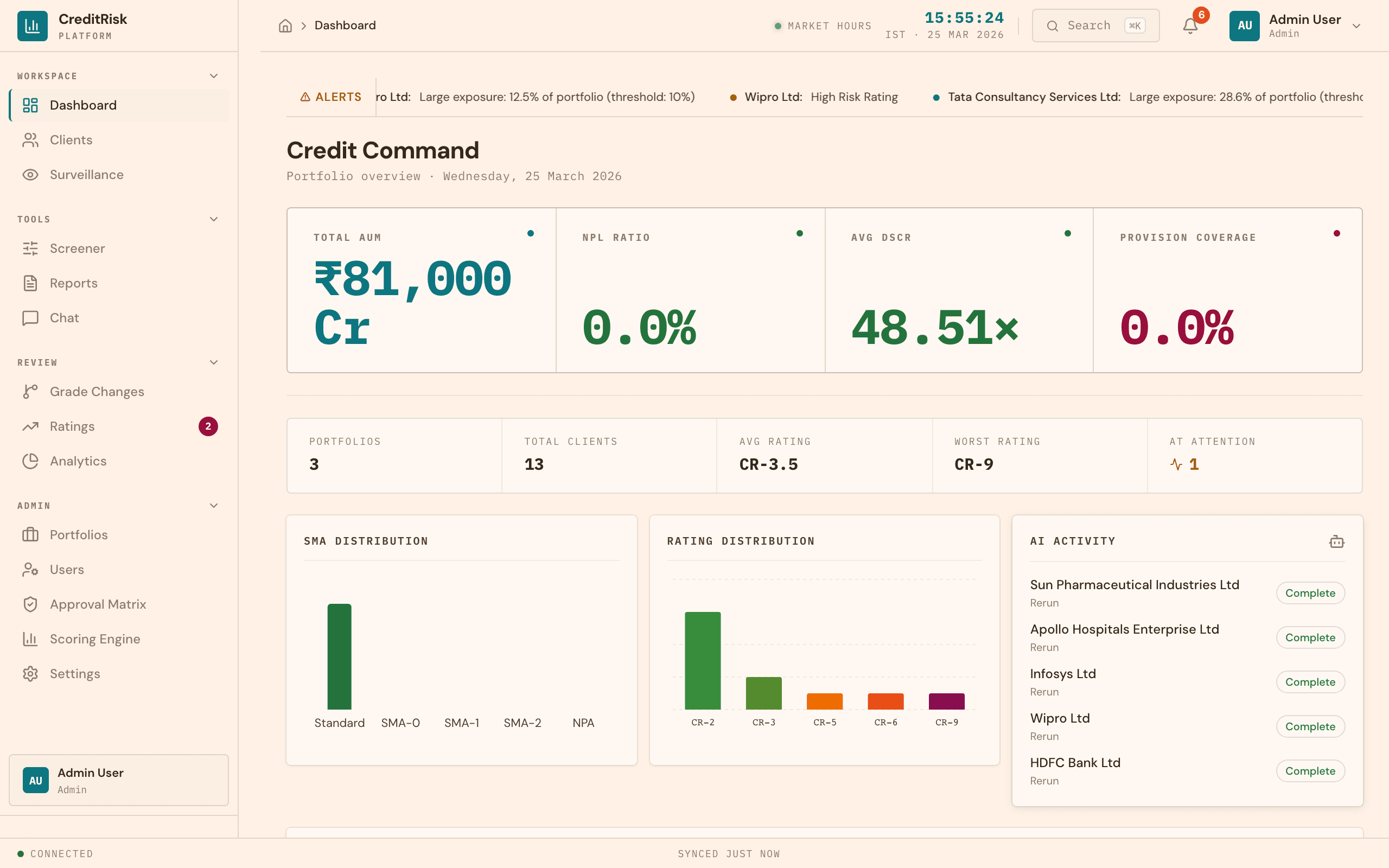
CreditRisk Command Centre coordinates data gathering, deterministic analysis, model-assisted judgement, review queues, monitoring, and reporting without turning a consequential decision into an opaque chatbot answer.
- demonstrator
- Product
- approval authority
- Officer
- registered analysis nodes
- 14
01 · Problem
Credit review crosses borrower records, financial ratios, news, legal research, spreadsheets, approval emails, and recurring monitoring. The work is fragmented, while the final decision still needs a defensible evidence trail.
An agent in this setting cannot simply generate a rating. It has to gather sources, separate facts from model-assisted judgement, expose uncertainty, and hand authority back to the responsible officer.
02 · Axis Agents’ role
Axis Agents designed and built the agentic product slice across the web interface, Python API, PostgreSQL-backed workflow state, enrichment pipeline, review paths, monitoring surfaces, and reporting views.
The system is shaped around officer, senior-officer, and administrator responsibilities so agent suggestions remain reviewable actions rather than silent automated decisions.
03 · Agentic system
What was built
Gather and structure evidence
A 14-stage LangGraph workflow resolves company context, gathers financial, news, legal, and registry evidence, computes ratios, and prepares a structured assessment.
Keep facts and judgement separate
Deterministic calculations, source material, qualitative analysis, and model suggestions remain inspectable instead of being compressed into one unsupported answer.
Route consequential actions through people
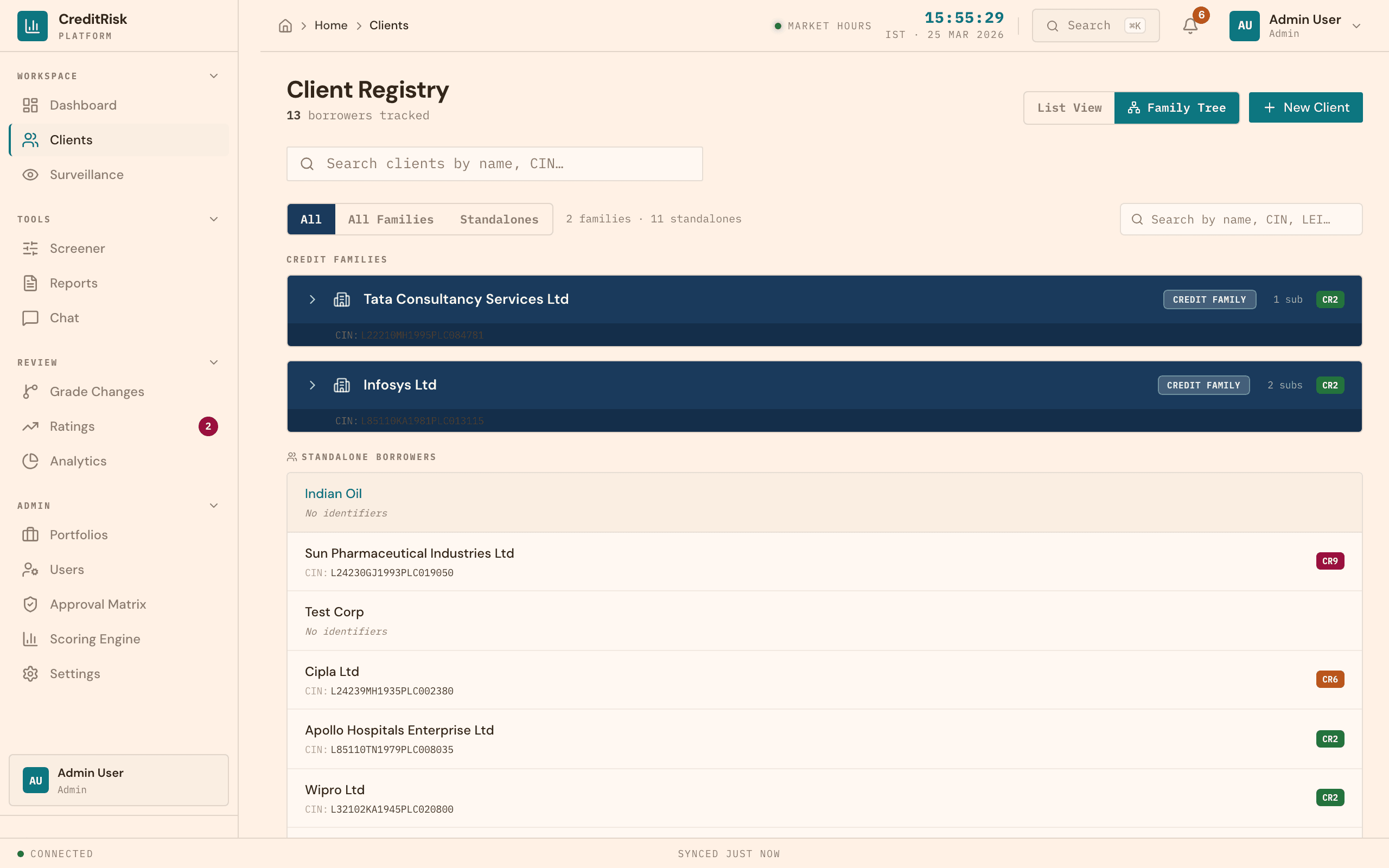
Role-based queues preserve submission, review, approval, rejection, and return states. Suggested changes do not silently overwrite the recorded grade.
Continue after the initial decision
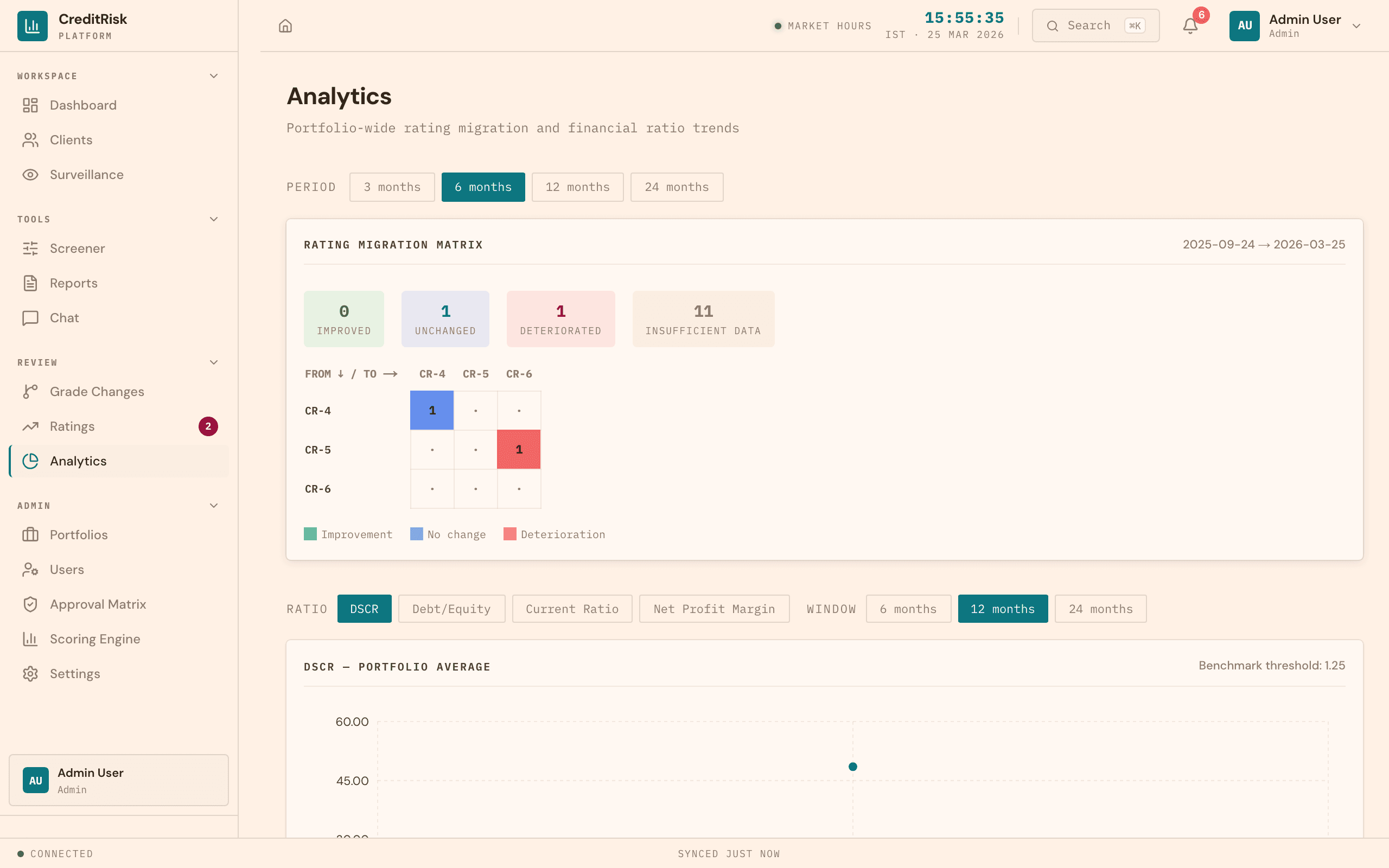
Surveillance indicators, scheduled checks, reports, cost visibility, and an activity trail keep the workflow observable after onboarding.
04 · Human control
Consequential grade changes follow a separate submission and approval workflow that prevents an initiator from approving the same change.
Destructive chat actions require an expiring confirmation step. The function named human_review_gate routes by confidence; it is not itself a paused reviewer checkpoint.
05 · Outcome
A working end-to-end demonstrator that makes the path from borrower intake to reviewed decision visible in one operating surface.
The build demonstrates a reusable agentic pattern: deterministic data work, bounded model assistance, durable workflow state, explicit human authority, and traceable follow-up actions.
The same architecture applies to compliance, underwriting, investigations, and other workflows where an agent must show its work before a person acts.
06 · Proof
Evidence, not adjectives
Live demonstrator
The public entry point exposes the three role-based product paths.
Pipeline implementation
The source contains the 14-node analysis graph plus a separate grade-change workflow that prevents initiators from approving their own changes.
Operational coverage
Dedicated tests cover permissions, pipeline nodes, approvals, surveillance, reports, costs, and structured outputs.
Similar problem?
Start with one evidence-backed workflow.
Bring one painful process, representative inputs, and the output that matters. We will scope the smallest paid slice that can prove the path.